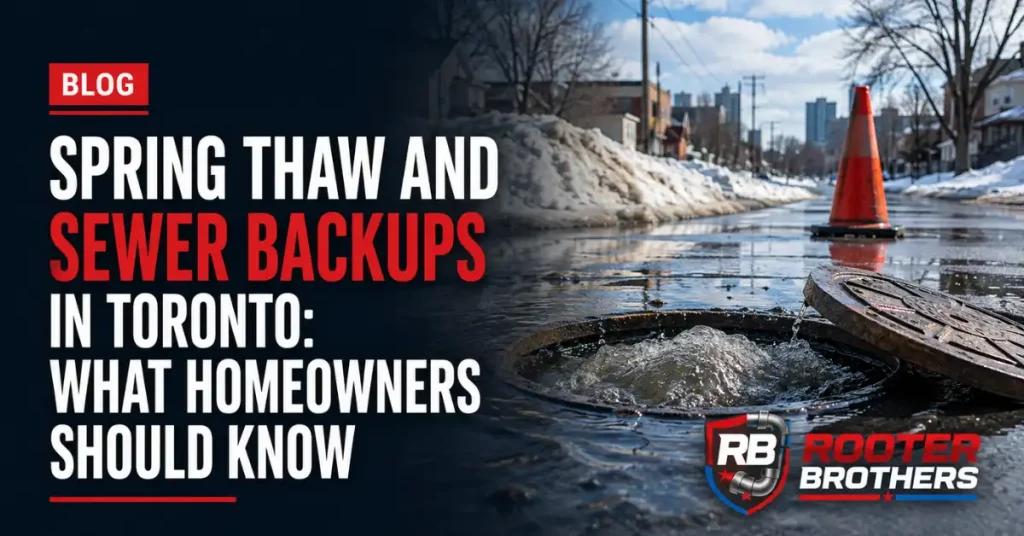
Every March and April, our phones start ringing more than usual, and it is almost always the same story. A family wakes up to water in the basement after a week of melting snow and rain, with no idea their sewer line had anything to do with it.
The truth is, spring is one of the most predictable seasons for sewer backups in Toronto, and it has very little to do with anything going wrong inside the house. It comes down to what is happening underground, where decades old infrastructure suddenly has to handle far more water than it was ever designed to move at once.
Where the Extra Water Actually Comes From
Toronto’s older neighbourhoods, particularly those built before the 1970s, still run on a combined sewer system, where stormwater and household wastewater share the same pipe. Areas like The Annex, Rosedale, Riverdale, Cabbagetown, and the Junction are known for this older infrastructure, along with parts of South Etobicoke near Mimico Creek, which has a long history of spring flooding. During a normal week, that pipe handles the load fine. During spring thaw, melting snow combined with rainfall sends a sudden surge of water into that same shared system, and when the municipal line reaches capacity, water has nowhere to go but back up through the lowest point it can find, which is often a basement drain or toilet.
Why Frozen Ground Makes It Worse
Even after the snow on the surface melts, the ground several feet down can stay frozen for weeks, which prevents water from draining naturally into the soil the way it would in summer. That frozen layer forces even more water to run off the surface and into the storm and sewer system rather than soaking away, adding to the load at the exact time the system is already stretched thin.
Signs Your Home Is at Risk
Not every home in an older neighbourhood will experience a backup, but certain warning signs suggest your property is more exposed than others. A basement floor drain without a backwater valve is one of the biggest risk factors, since it gives water a direct path back into your home once the municipal line surcharges. Homes at the bottom of a slope or on a street that has flooded before are also worth extra attention heading into spring.
What You Can Do Before the Next Thaw
A backwater valve is the single most effective way to stop this specific problem, since it allows water to flow out to the municipal system but closes automatically if pressure tries to push it back in. Clearing gutters and downspouts so they direct water away from the foundation also reduces how much extra water ends up near your home during the thaw. For homes with a known history of backups, a camera inspection before spring can confirm whether the line itself is already compromised and more vulnerable to surcharging.
How Rooter Brothers Helps Before and After the Thaw
Our team installs and inspects backwater valves across Toronto and the GTA with fast response scheduling built around the season, since spring is our busiest time of year for exactly this reason. Every valve installation comes with upfront pricing confirmed before we start, and every job carries our guaranteed workmanship, so you are covered well past the day the crew leaves.
Does home insurance cover spring sewer backups?
Coverage varies significantly by policy and provider. Many standard policies exclude sewer backup unless you have added specific overland water or sewer backup coverage, so it is worth confirming with your insurer before the season starts, not after a backup happens.
How long does a backwater valve installation take?
Most installations are completed in a single day, though the exact timeline depends on the location of your main line and how accessible it is from inside the home.
Is spring the only time backups happen in Toronto?
No, but it is the most predictable time. Summer flash storms can cause similar surcharging, though spring thaw tends to hit older, combined sewer neighbourhoods the hardest due to the added factor of frozen, saturated ground.
If your home has never had a backwater valve or has a history of spring backups, our backwater valve installation team can assess your risk before the next thaw arrives.